
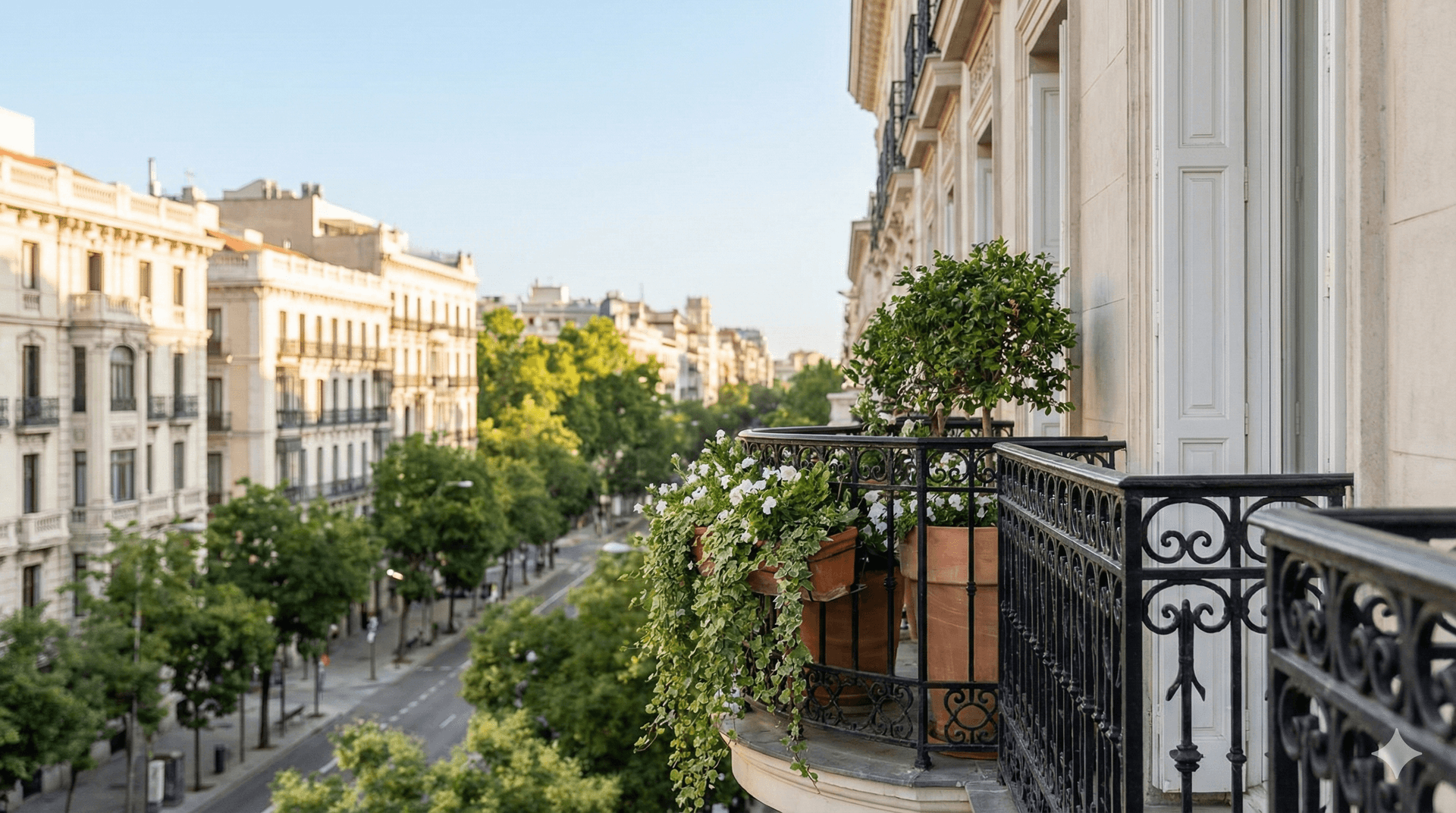
"What is the best neighborhood for expats?" is the most common question we get asked.
Clients often arrive with a very specific idea: "I want to live in La Latina, in Trafalgar, or in Goya". While giving a generic recommendation is easy, finding the right fit usually requires understanding your lifestyle—and the current financial pulse of the market—first.
Understanding Madrid's Layout: Districts vs. Barrios
To understand Madrid, you must understand its layout. Madrid is officially divided into 21 large districts, and each district contains around five or six smaller neighborhoods (barrios).
Expats often mix these up. When clients ask us where to live, our first recommendation is to think in terms of Districts first to understand their general differences.
For example, most buildings in Centro were built in the early 1900s. The streets are narrower, but filled with beautiful historic buildings. The large number of small shops, cafes, bars, and restaurants make the area younger, bohemian, and incredibly lively. As the city expanded outward toward Chamberí and Salamanca, it adopted a more ordered grid layout, attracting a more family-oriented demographic with some of the best bilingual schools in the city.
The PropXper Golden Rule: Keep an open mind. If you get stuck thinking, "I must live in Trafalgar," you might miss your dream home just a few streets over in Gaztambide. Looking at a slightly larger area gives you a much better pool of apartments to choose from.
Here is our breakdown of the prime districts based on the profiles we see most often.
1. The Heavyweights: Salamanca & Chamberí
If you have a healthy budget, these two districts are the gold standard. There is a reason for their high price per square meter—for those who can afford it, these neighborhoods are fantastic.
- Salamanca ("The Golden Mile"): This is Madrid’s most exclusive luxury district. Known for its grid layout and high-end shopping, it is impeccably clean and safe.
- Chamberí ("The Expat Favorite"): Currently the most highly requested district among our clients. It strikes the perfect balance between traditional Madrileño authenticity and high-end living, with excellent public and concertado (semi-private) schools.
2. The Green Lung: Retiro
Best For: Dog owners, runners, and families who want a quiet, residential life next to a 125-hectare park.
- The Reality: While walking to Chamberí or Centro through the park is lovely, public transport in Retiro can be a hassle. You will often have to change Metro lines, making it feel further away from the action. Furthermore, while it is very family-friendly, it lacks the spontaneous liveliness of Salamanca or Chamberí.
- The Architecture: Except for Jerónimos (which has amazing architecture) and Ibiza, many residential buildings here date back to the 1970s and lack the classic Madrid charm.
3. The "Centro" Warning & The Madrid Ideal
Centro takes Madrid's heterogeneity to the extreme. You can find everything here, from wild parties to ultimate luxury. Many local Madrileños will tell you that living in the center is horrible, but many expats (myself included) absolutely love it. It is the "Madrid Ideal" that foreigners seek.
Within a short walk, you cross through the upscale, bohemian streets of Chueca, the lively energy of Malasaña, the multicultural hub of Lavapiés, the historic elegance of Palacio, and the bustling epicenter of Sol. This diversity is highlighted by the presence of beloved sub-barrios like La Latina, Antón Martín, Barrio de las Austrias, and Conde Duque.
- The Reality Check: If you are sensitive to noise, you need to be particularly careful. The vibe can change drastically from one street to the next.
- The PropXper Story: We often initially discard Centro for clients seeking peace, only to end up back there. We recently worked with a retired American couple from New York who initially wanted Chamberí. They ended up falling in love with an apartment right in Sol! We had to ask them to go back and visit the street on a Friday night just to make sure they knew what they were signing up for (they still loved it).
4. The Smart Contenders: Chamartín, Tetuán & Arganzuela
If you want to stay inside the M-30 highway but need more space, these districts offer a different style of living.
-
Chamartín (North): Highly residential, very safe, and family-friendly. You generally get more square meters for your money here.
-
Tetuán (North-West): While okay for families, this area is a much better fit for young professionals moving for work, offering great connectivity to the financial district.
-
Arganzuela (South): The best choice for active lifestyles. Bordering the incredible Madrid Río park, it offers easy access to vast green spaces while keeping you closely connected to the center.
-
The Architecture Reality: Most of the buildings in these districts were built between the 1970s and 1990s. They generally lack the historic charm and dense concentration of boutique cafes found in Centro, Chamberí, or Salamanca. While you lose the 19th-century aesthetics, you gain practicality. These areas are where you are much more likely to find newer, post-2000 apartment complexes featuring modern amenities like swimming pools (piscinas), gyms, and underground parking garages. If having modern amenities like a swimming pool (piscina), a gym, or an underground parking garage is a dealbreaker for you, this is where you should look.
-
The Trade-off: While these areas are incredibly comfortable and practical, they generally lack the dense, vibrant concentration of boutique shops and cafes you find right outside your door in Centro or Chamberí that expats often seek and love.
5. Suburbs, Schools & Alternative Budgets
Once you cross outside the M-30 highway, the real estate market splits into two very different directions depending on your budget and goals.
The Premium Suburbs (International Schools) If you are moving with children and want a standalone house with a garden near top-tier international schools, look toward the north and west: Pozuelo / Aravaca, La Moraleja, and Hortaleza (Conde Orgaz).
- The Reality: To find a true standalone house in these areas, you generally need a minimum budget of around €5,000/month. You will also absolutely need a car.
The Middle Ground
- Ciudad Lineal: Located just east of the M-30, this district is a fantastic, highly residential middle ground. It offers a quieter lifestyle with slightly lower prices than Chamartín or Salamanca, while still being well-connected by the Metro.
Value-Driven Districts
- Looking for something more budget-friendly? Districts across the river like Latina, Carabanchel, and Usera offer lower prices per square meter. However, you will have a longer commute and will generally have to make concessions regarding modern amenities and building quality.
Ready to find your perfect fit? At PropXper, we don't just hand you a map. We sit down, listen to what you are looking for in terms of lifestyle and needs, and give you recommendations based on reality.
Sometimes, you need to forget what you think you want to find the perfect place. We once had a client who knew Madrid well and insisted on living in the upscale Recoletos area. After exploring their actual day-to-day needs, they ended up renting an outstanding apartment in Palacio (Barrio de las Austrias) and couldn't be happier.
Your perfect home might not be where you expect it. Contact us to schedule your initial consultation and let us help you find it.